
Composite Gate Options
Every gate we make is a welded steel frame with composite board set into it. That means two separate decisions on colour before you get anywhere near the shape, the top and the ironmongery. This page shows what each one actually looks like, rather than describing it.
Every gate is a metal frame with composite infill
It is the thing most people do not realise until the survey, and it changes what is possible. Composite board is infill — it carries nothing. The welded steel frame behind it takes the weight, the leverage on the hinges and the wind.
Why the frame has to be steel
A gate leaf is a long lever working on two fixing points every day. Composite board on its own would flex and drop within a season. The frame is welded, not bolted, and the corners are the part that keeps the gate square for years rather than months.
Which is why the two colours are separate
The frame is powder coated. The boards come in a fixed range of wood-effect colours. They can match, or they can deliberately contrast, and that is a decision worth making on purpose rather than by default.
The same frame carries other infills
Timber boards, mesh, perforated sheet or metal bars all sit in the same frame. If you want the look of a metal gate, it is the same construction with the composite left out — which is what our metal gates are.
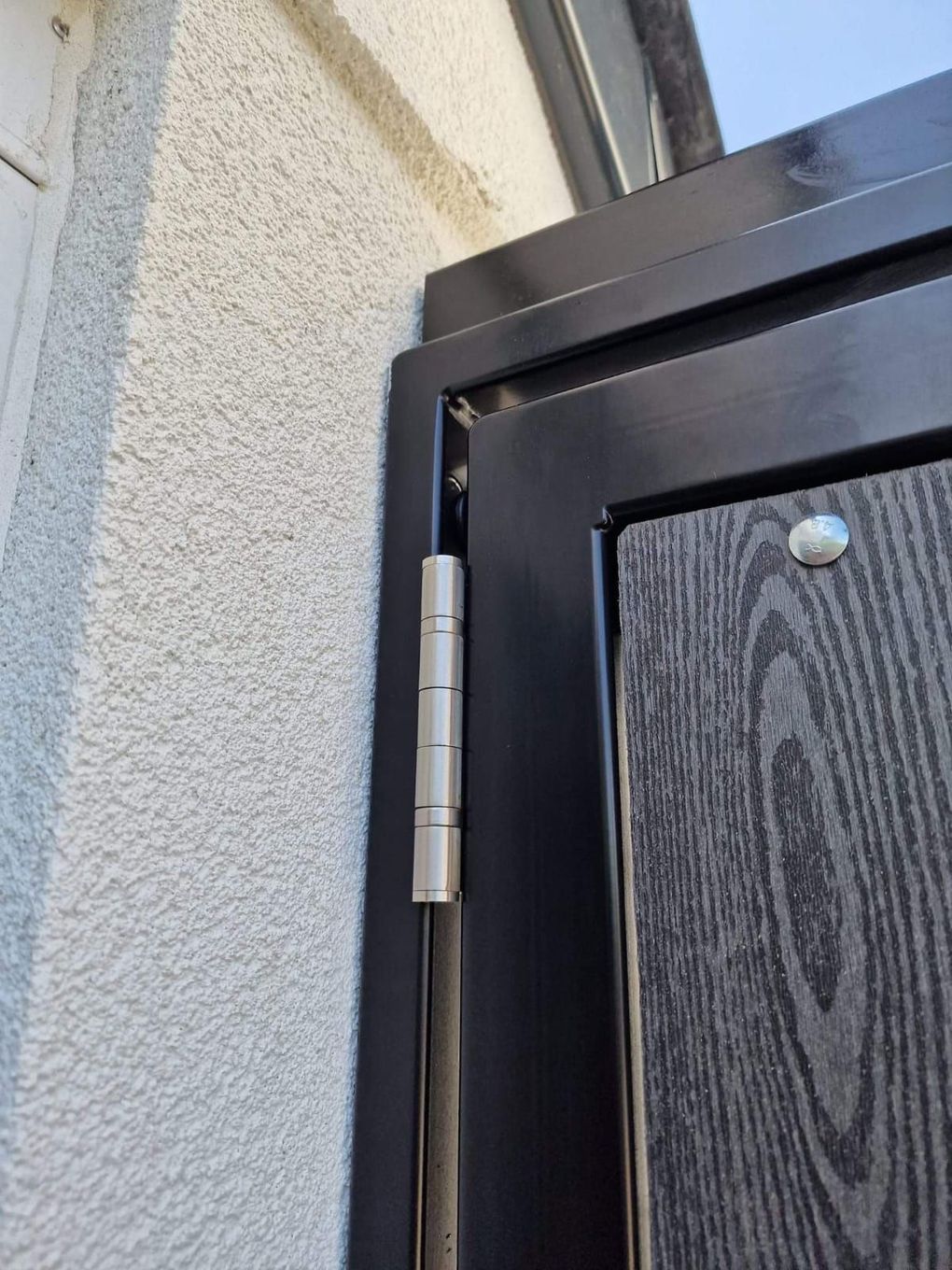
Welded corner — the joint that keeps a gate square
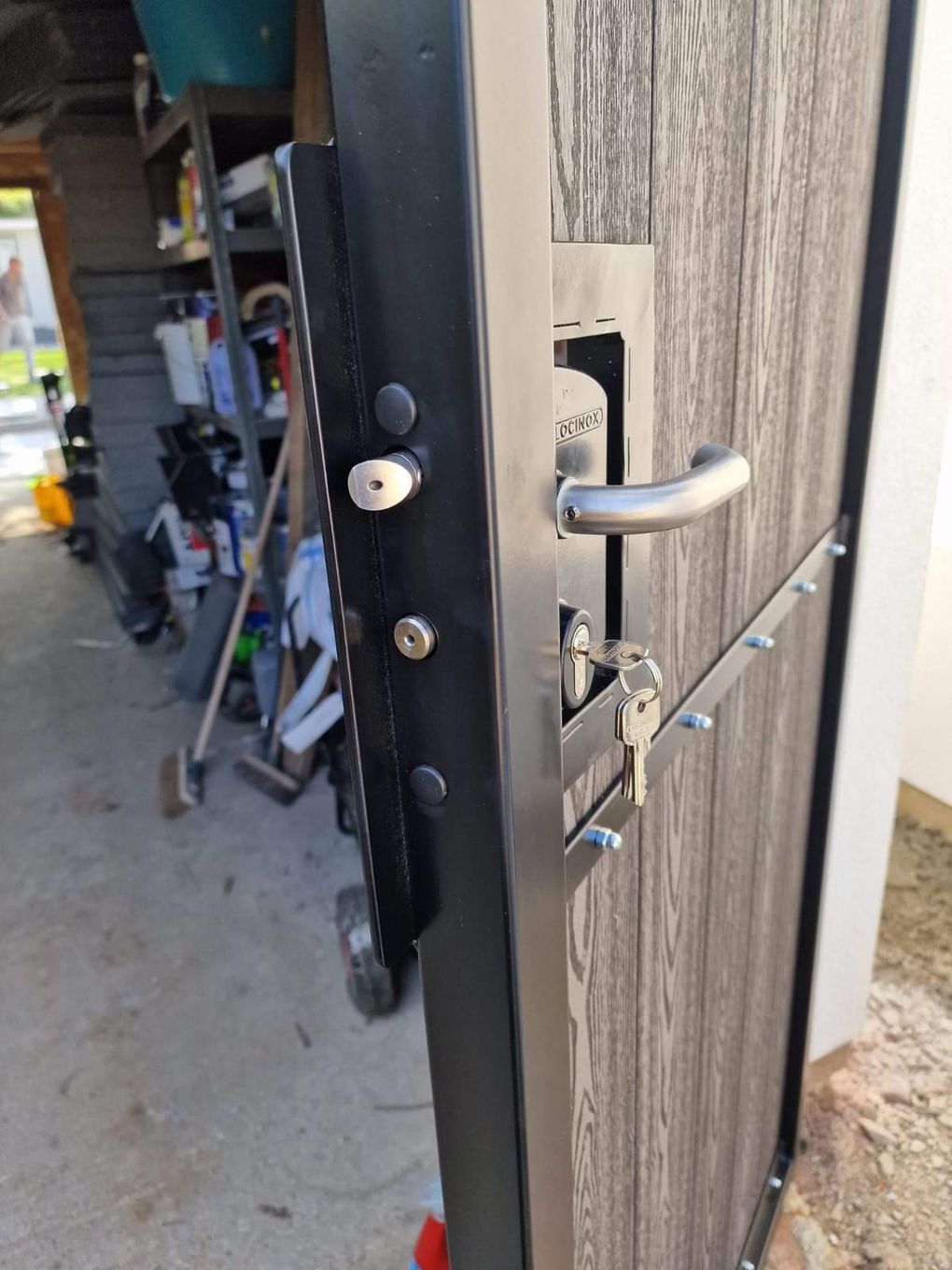
In the workshop — frame, lock and handle before the gate leaves
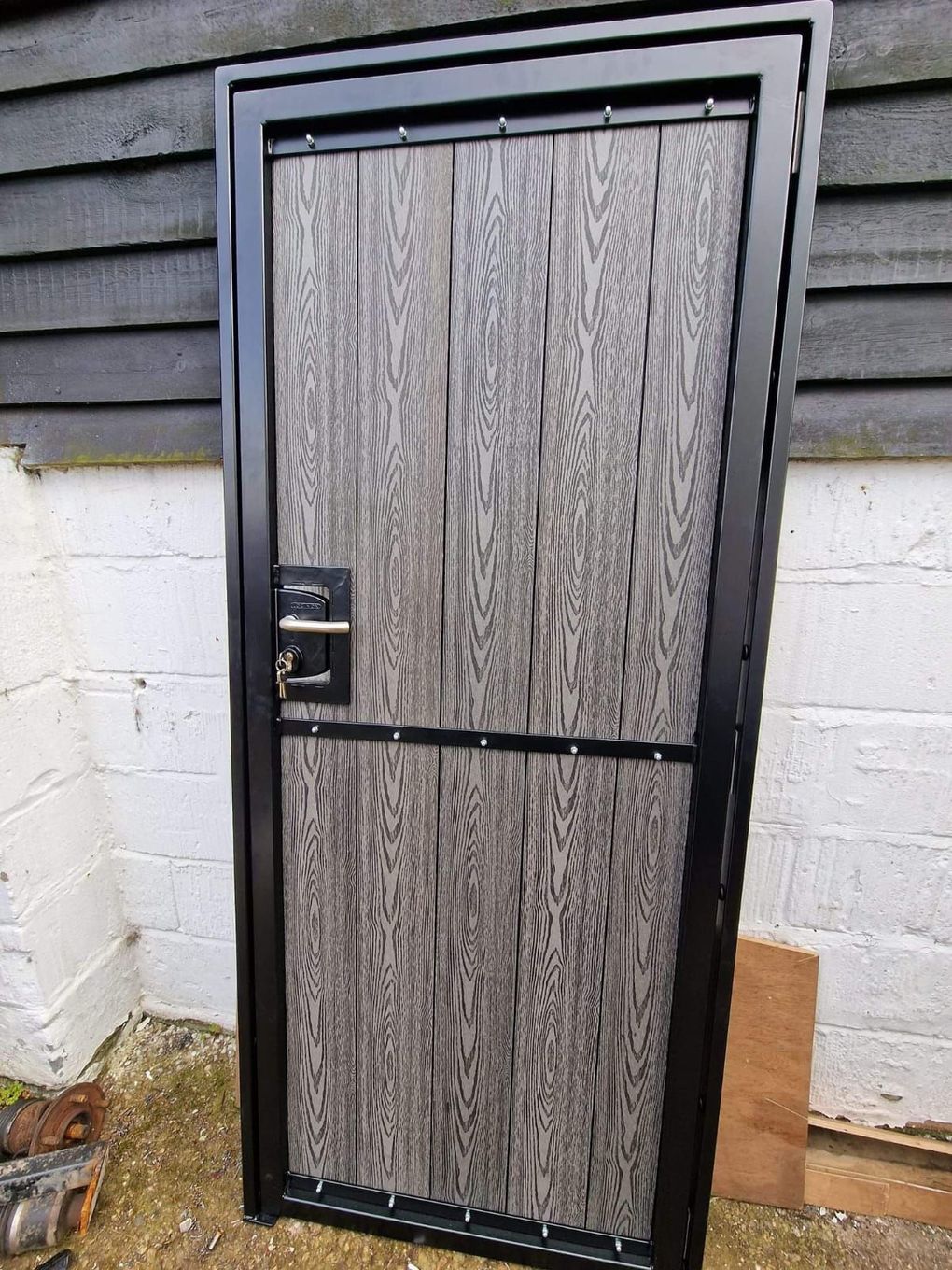
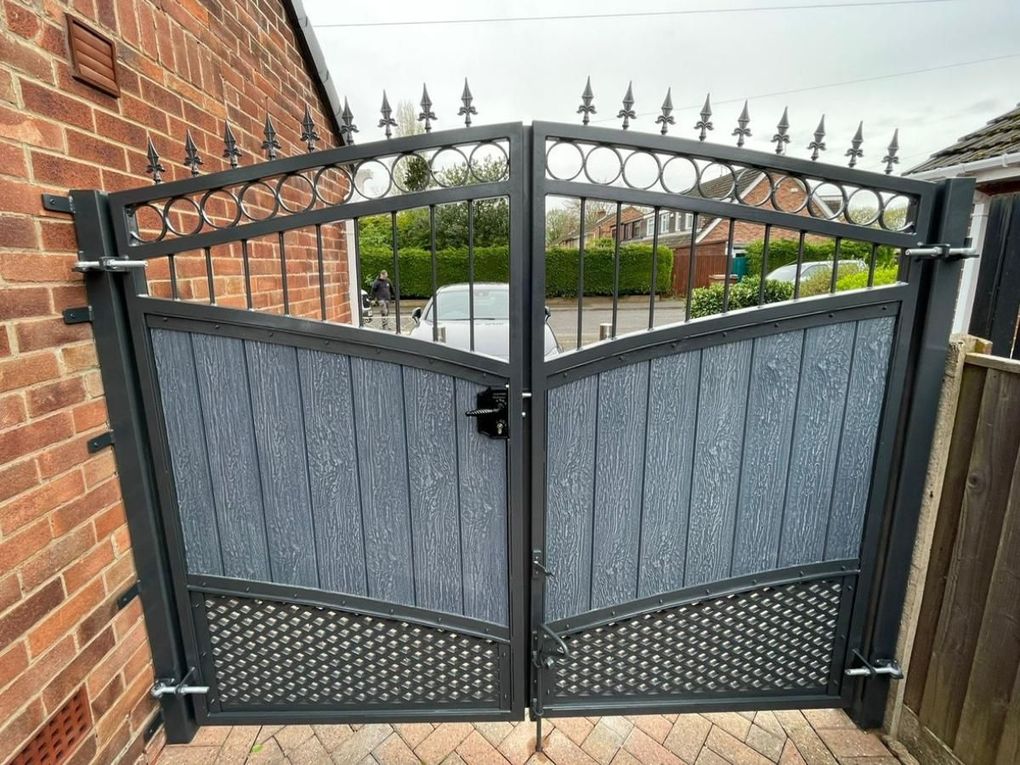
Finished leaf — boards set into the frame
The frame, and what colour it is
Frames are powder coated, and powder coating comes in the full RAL range. In practice almost everything goes out in one of three, because they sit well against modern windows and doors.
Anthracite grey, black, or matched to the boards
Anthracite grey has quietly overtaken black on newer properties. Black still looks right on a period frontage. A frame matched to the board colour reads as one object rather than a panel in a surround — a different effect, and not always the one people expect.
Anything else is possible, and rarely necessary
If you need a specific RAL to match existing railings, window frames or a front door, say so at survey. It is not an unusual request and it is not normally a long lead time. It is simply not a decision most people need to make.
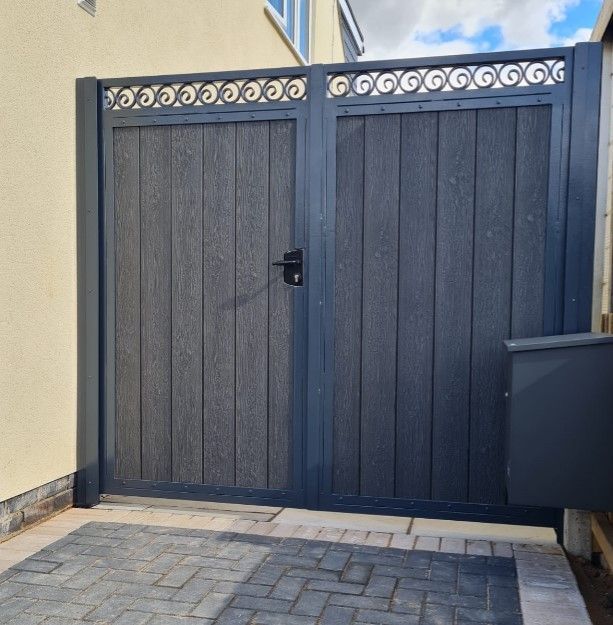
Frame matched to the boards — reads as one object
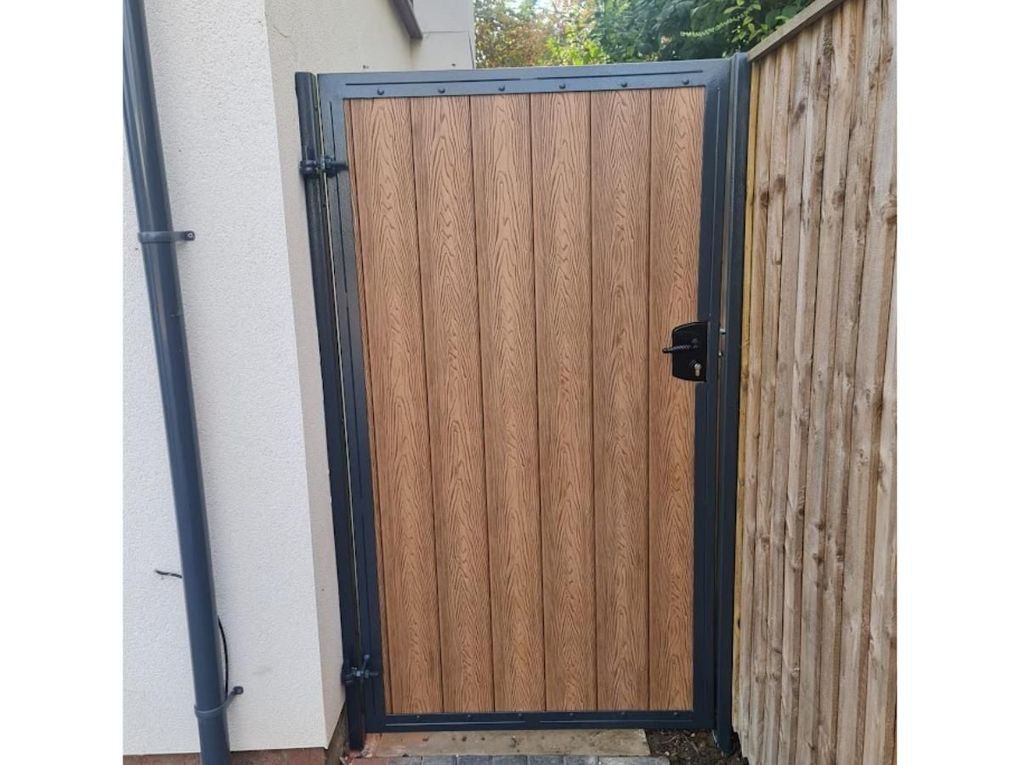
Grey frame, oak boards — deliberate contrast
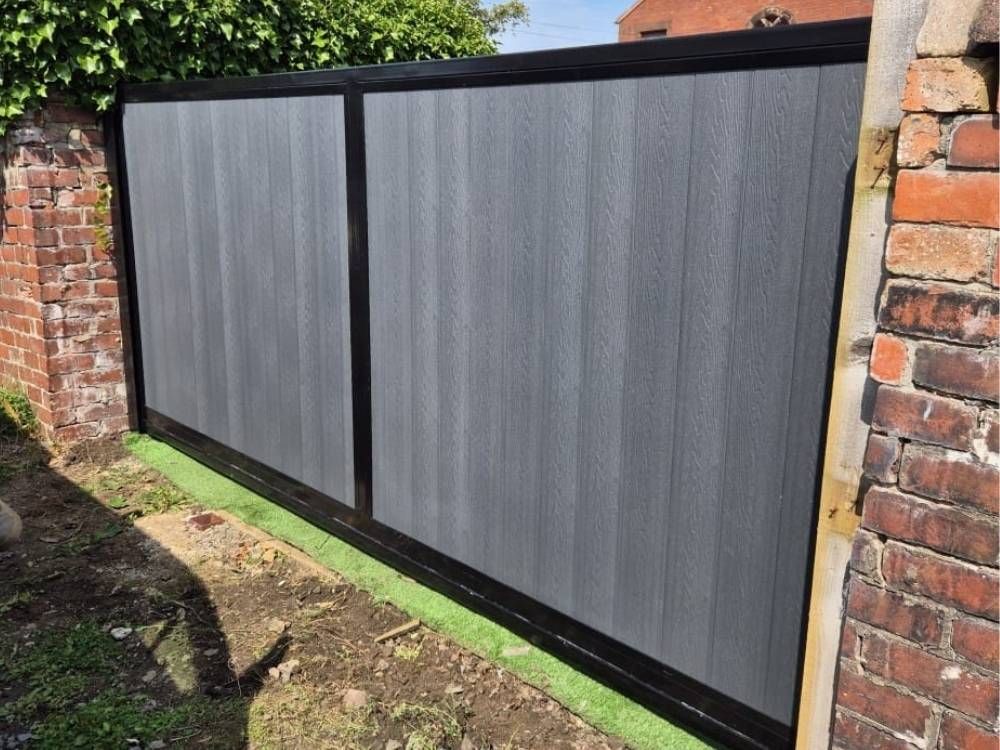
Black frame, light grey boards
Board colours
Seven wood-effect colours, deliberately kept to a small range so a gate made today still matches one made three years ago. Below is every one of them on a real gate rather than a swatch.
The one people ask for that does not exist
Black is the most common request and we do not make a black board. What people are usually picturing is charcoal, or anthracite grey in the shade. On this site black nearly always refers to the powder-coated metalwork — the frame, the hinges, the finials. If you want a gate that reads black from the road, it is anthracite or charcoal boards in a black frame.
How they weather
All seven are through-coloured rather than surface printed, so a scuff does not show a different colour underneath. They will lighten very slightly in strong sun over years, more noticeably on the darker two, and they do not need painting, staining or oiling at any point.
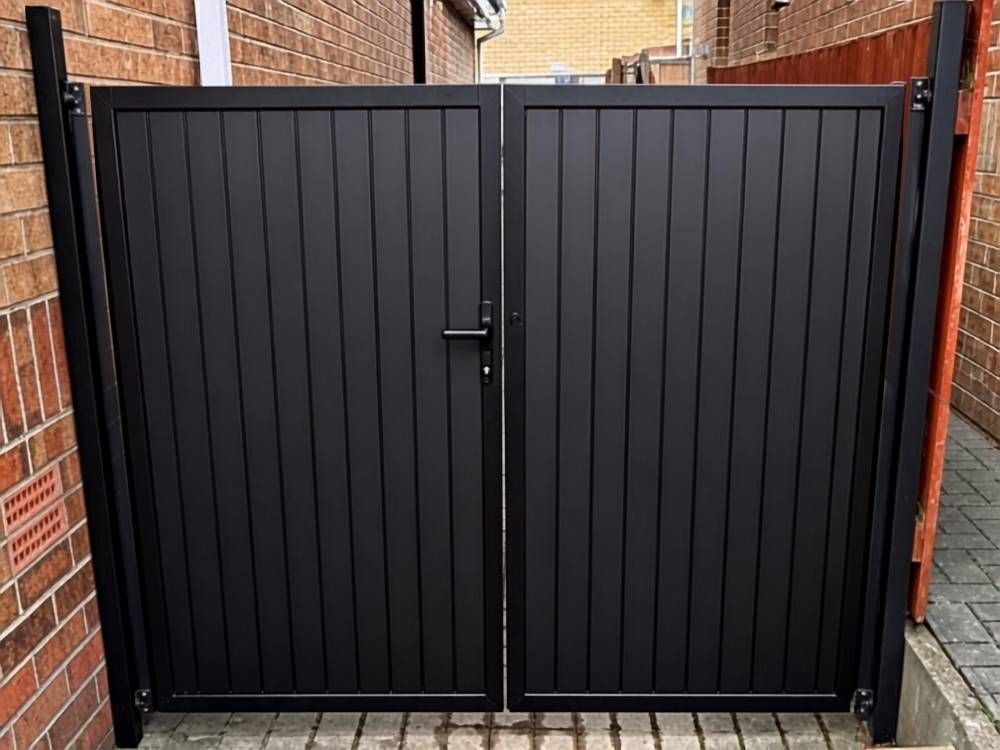
Anthracite grey — the default, and most of what goes out
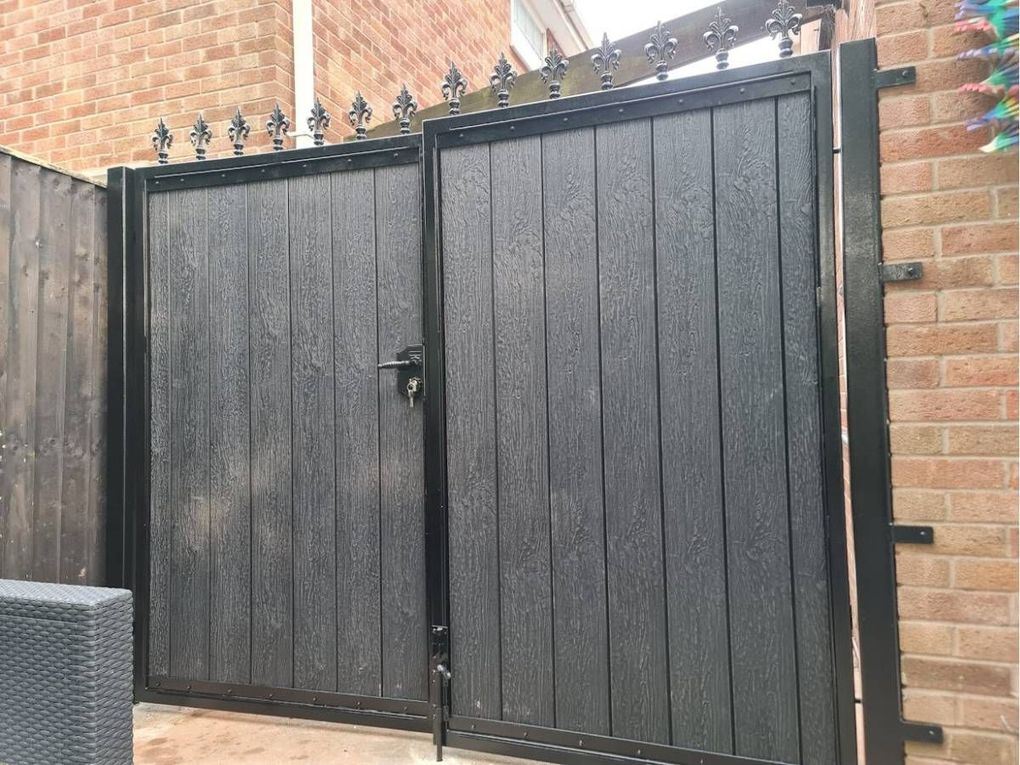
Charcoal — the nearest thing to black
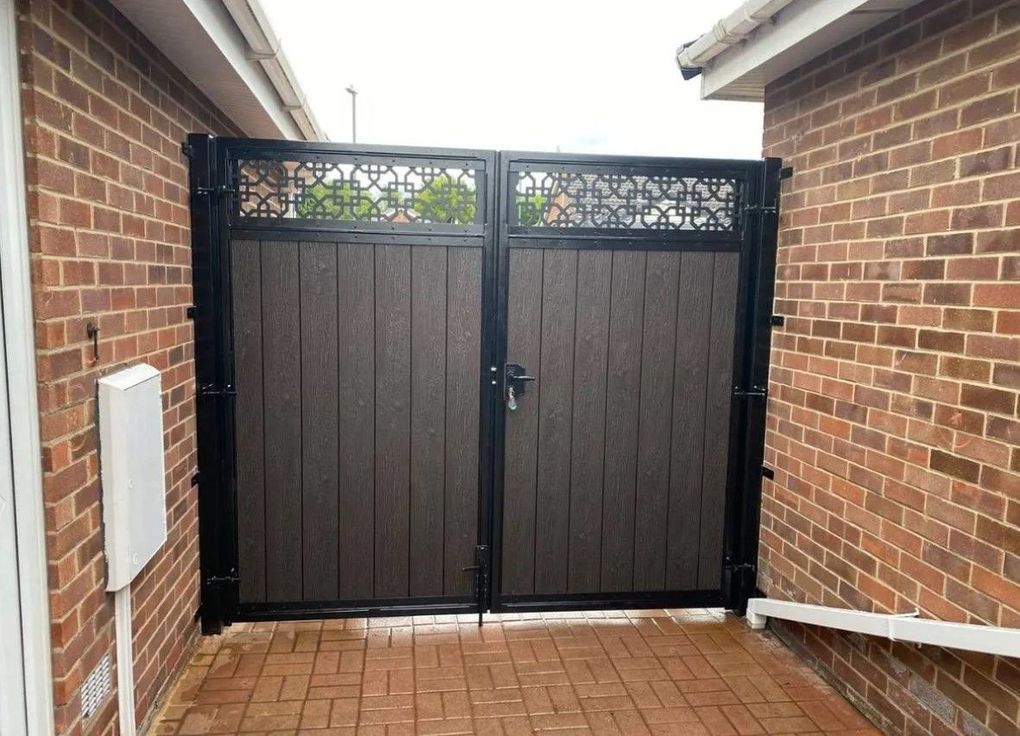
Chocolate
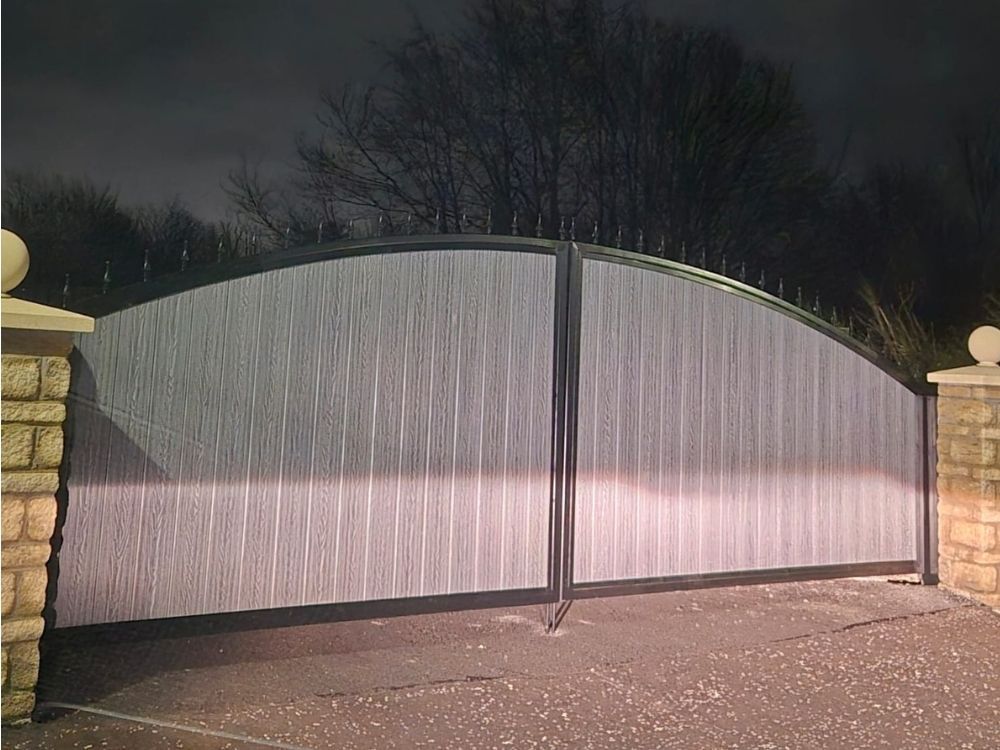
Light grey — between anthracite and light ash
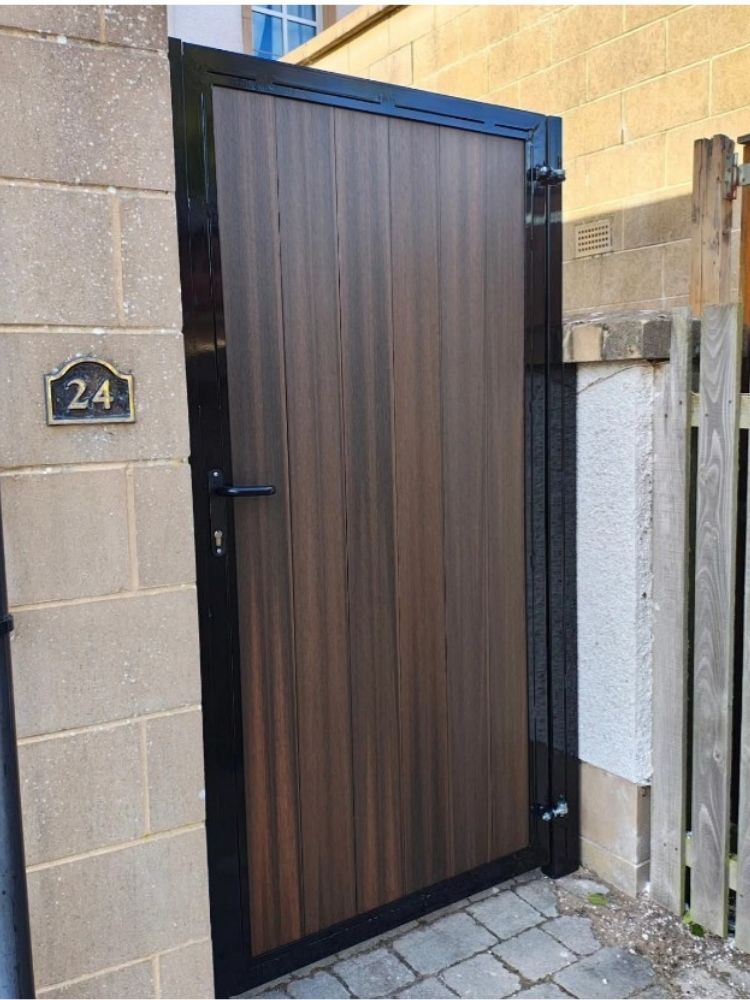
Walnut
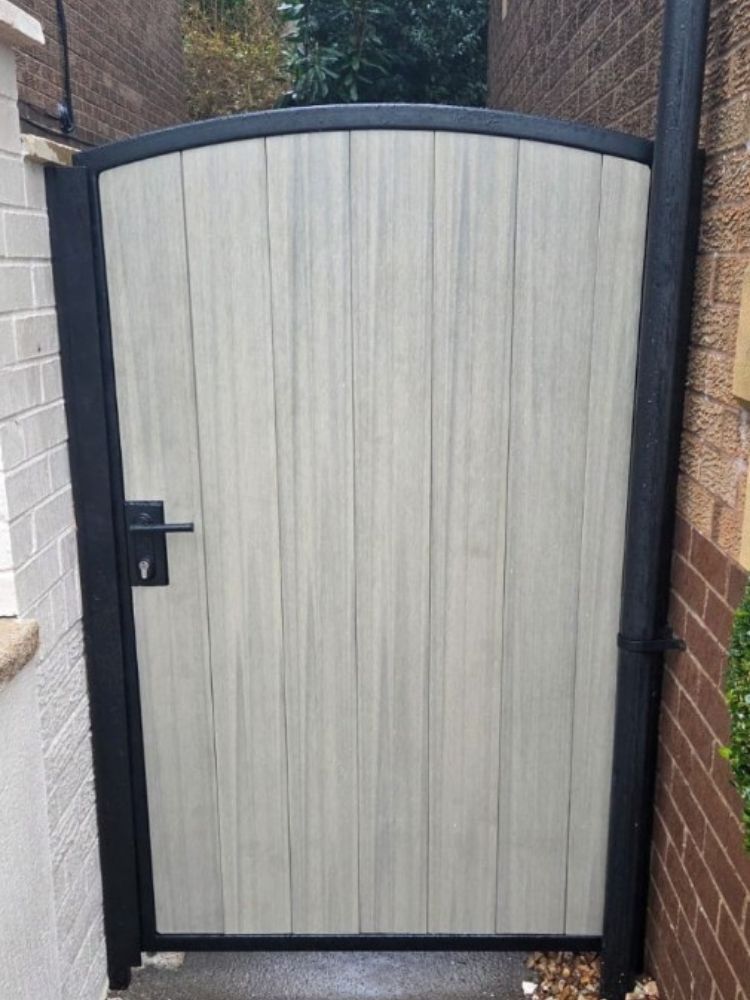
Light ash
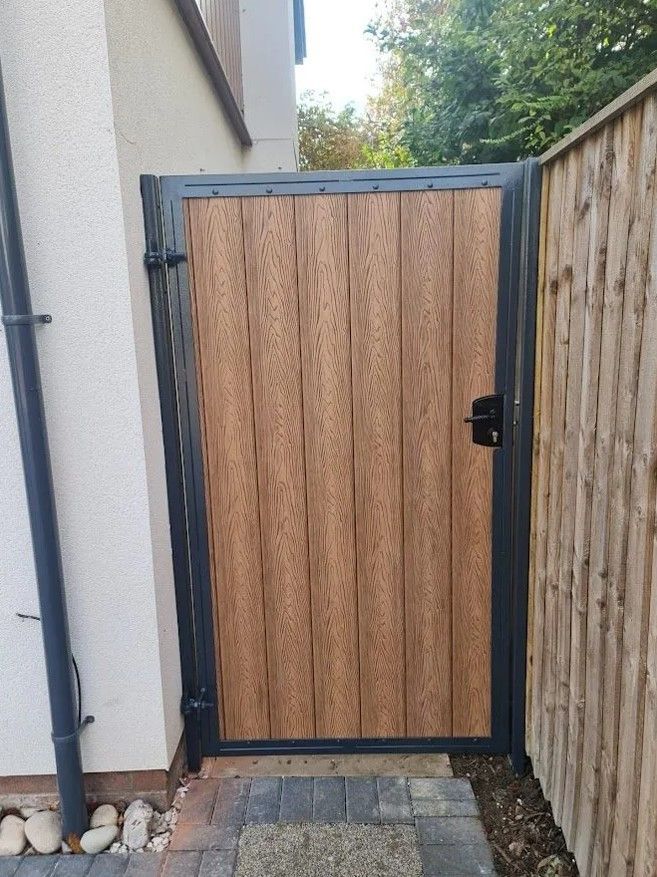
Light oak
Shape, and which way the boards run
The top of the gate and the direction of the boards do more to change how a gate looks than the colour does, and both cost the same as flat and vertical on most gates.
Flat, bow or arched
A flat top is the default and the quietest. A bow top rises gently to the centre. A fully arched top is the most decorative and the most work in the frame, because every board has to be cut to the curve. On a pair, the arch runs across both leaves and has to meet exactly in the middle.
Vertical or horizontal boards
Vertical is standard and reads as a gate. Horizontal reads as a panel, and on a modern rendered frontage it often looks more deliberate. Horizontal boards make a gate look wider and shorter, which is worth knowing if the opening is already wide.
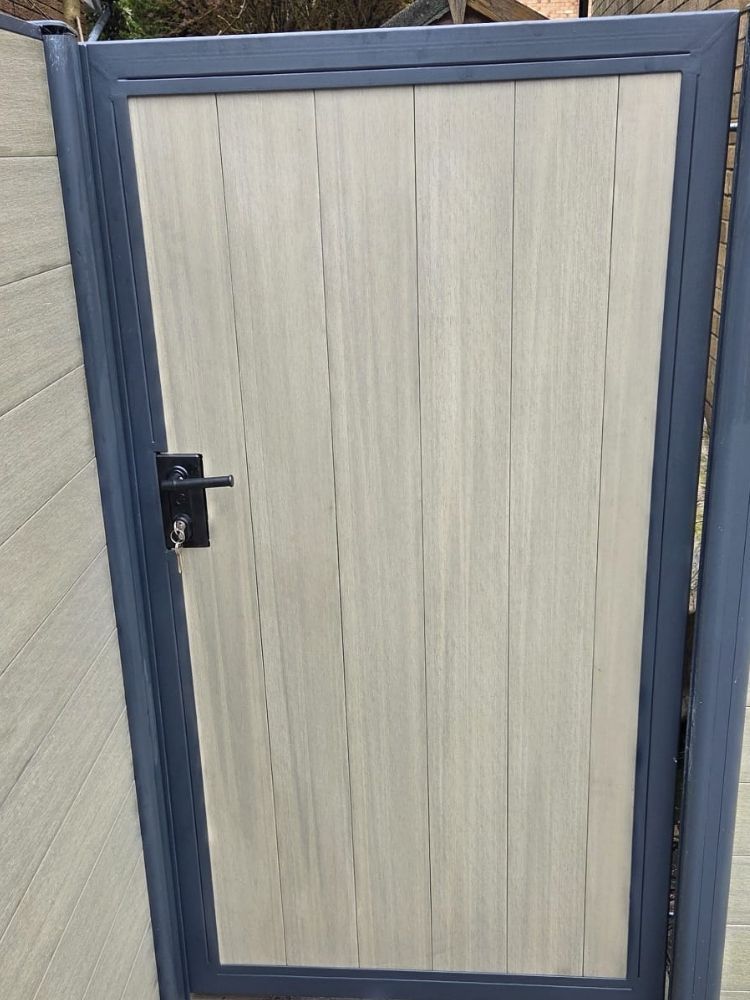
Flat top, vertical boards
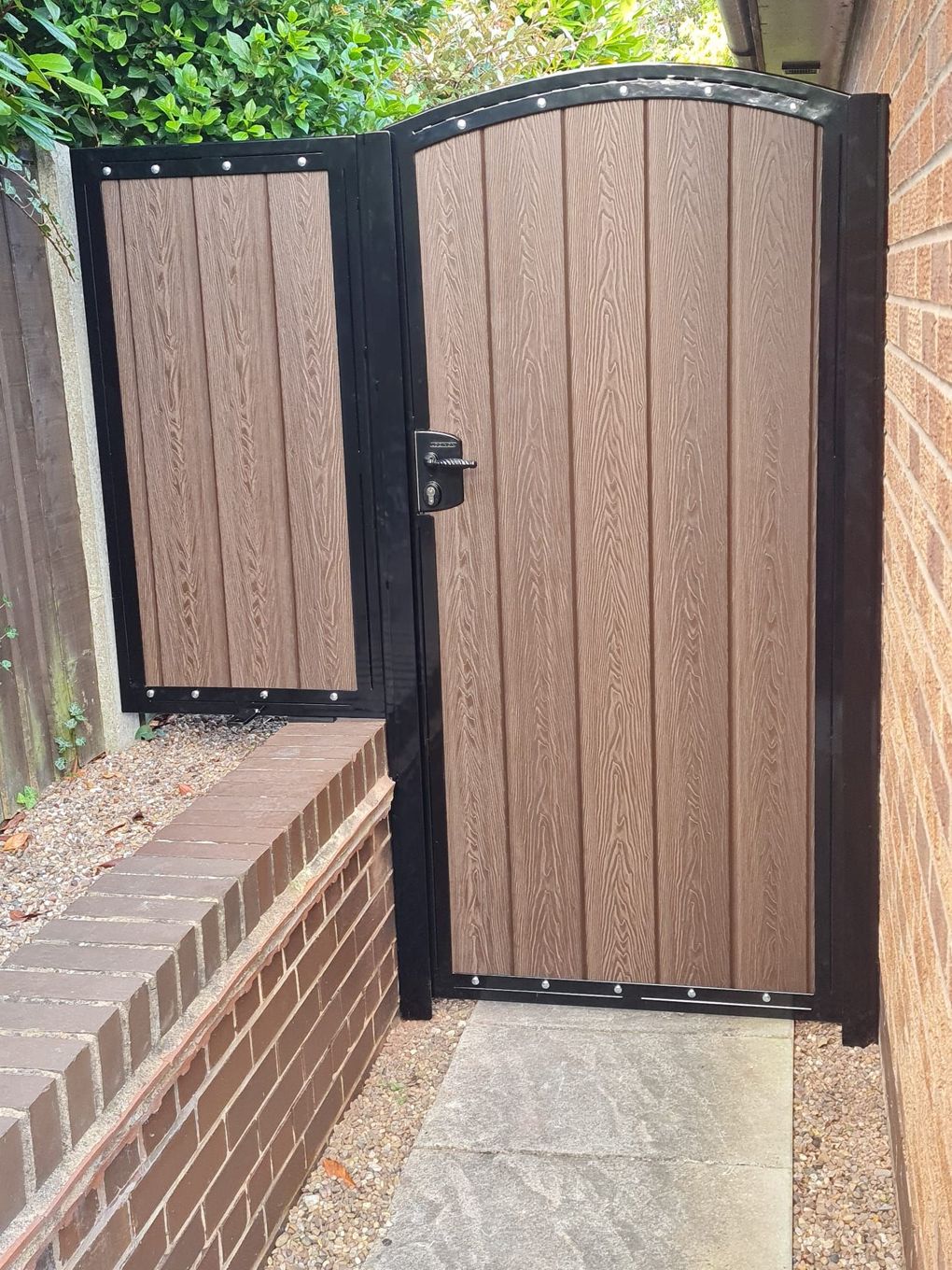
Arched top with a screen section
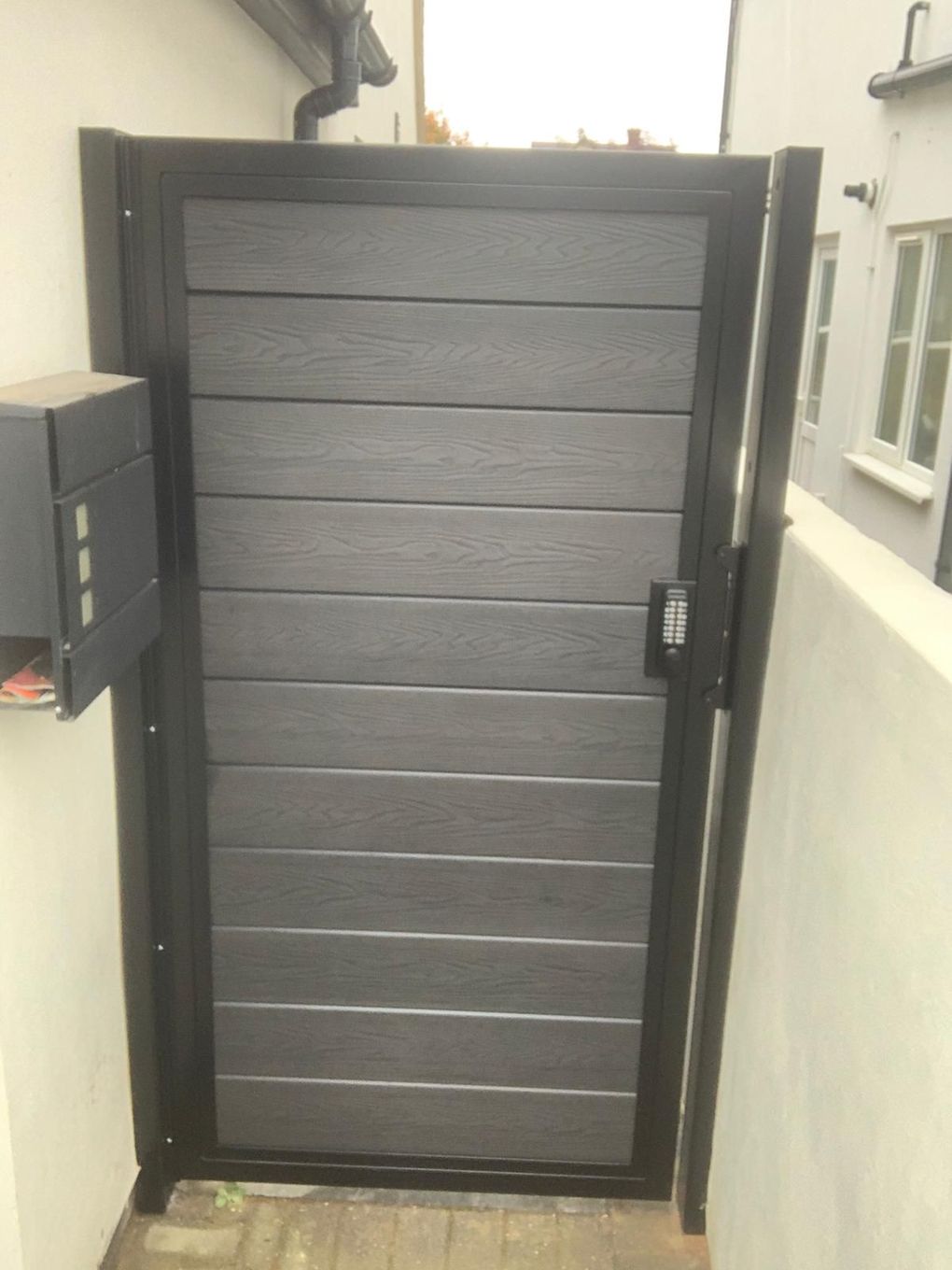
Horizontal boards — reads as a panel
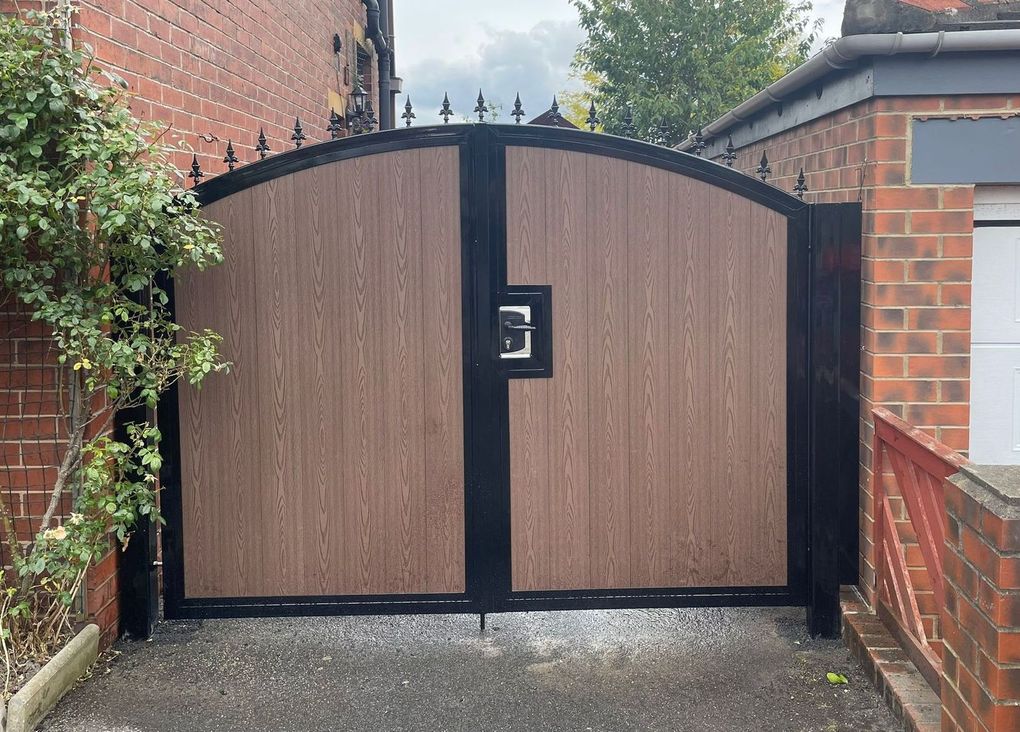
Bow top across a pair
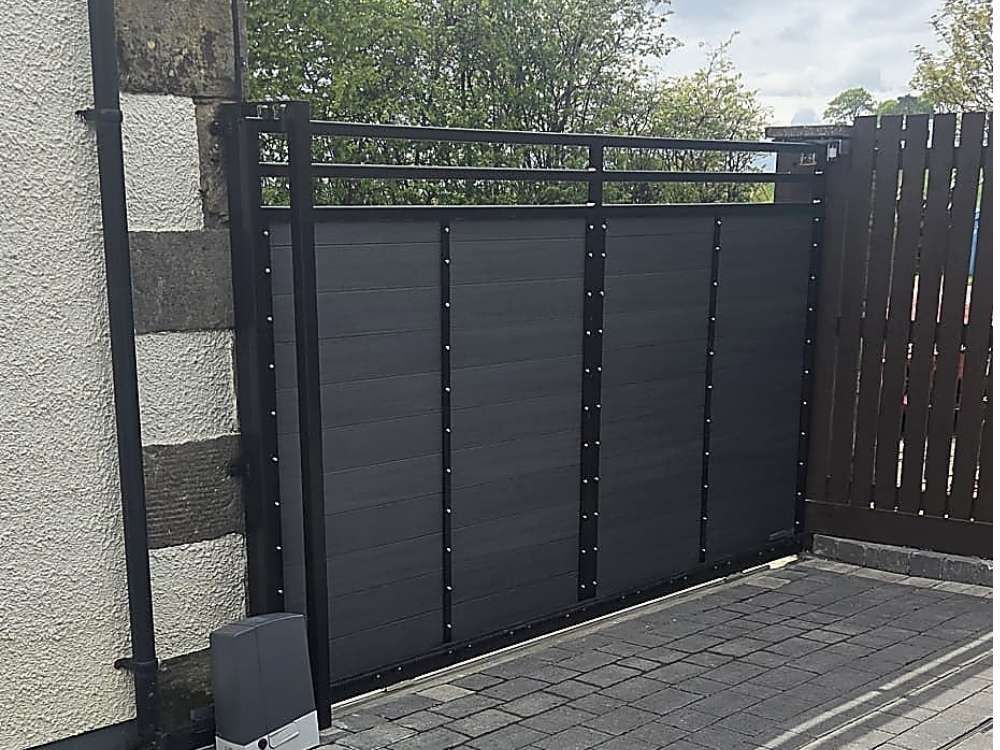
Sliding — flat top, railed section above
Tops, toppers and screens
Anything above the board line is frame work rather than panel work, which is why it changes the price and why it is worth deciding early.
What they are actually for
Height, mostly. A topper adds height without adding solid mass, so the gate stays under the threshold where a boundary structure would need planning permission and takes less wind than a solid leaf of the same height. The decorative effect is a bonus rather than the reason.
The four families
Finials sit on top of the frame — fleur-de-lis, spear and ball heads. Spikes and close-set railings are the security answer. Screens are a panel of patterned or perforated sheet set into the frame above the boards. Rings and scrollwork are formed steel and the most traditional.
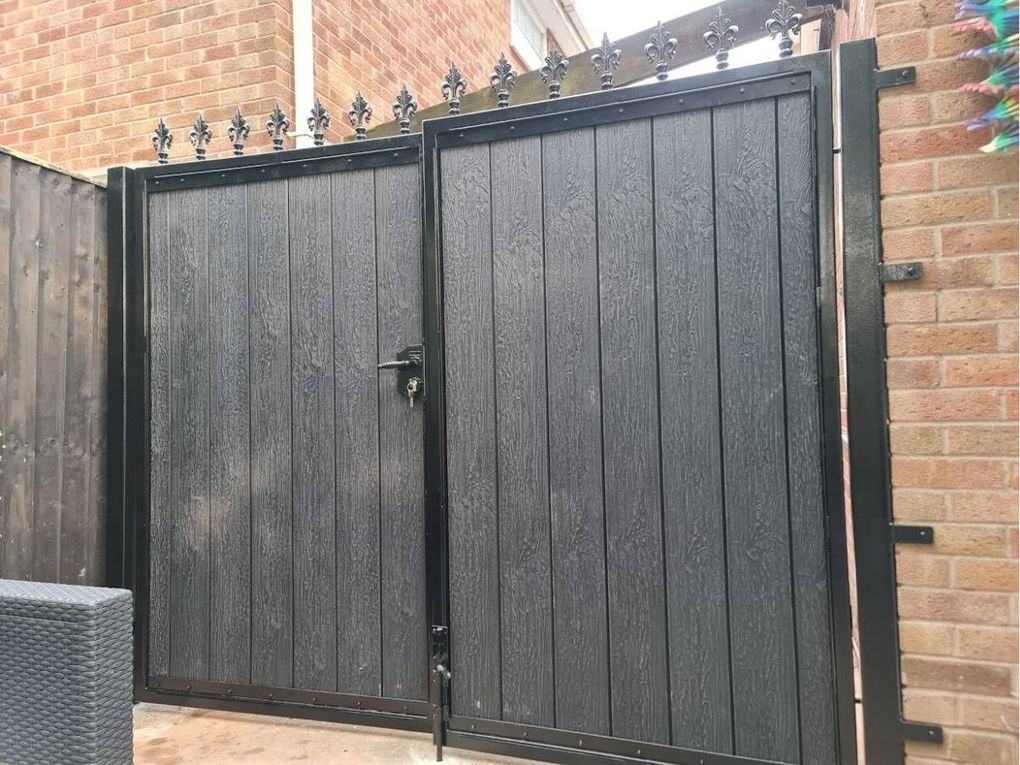
Fleur-de-lis finials
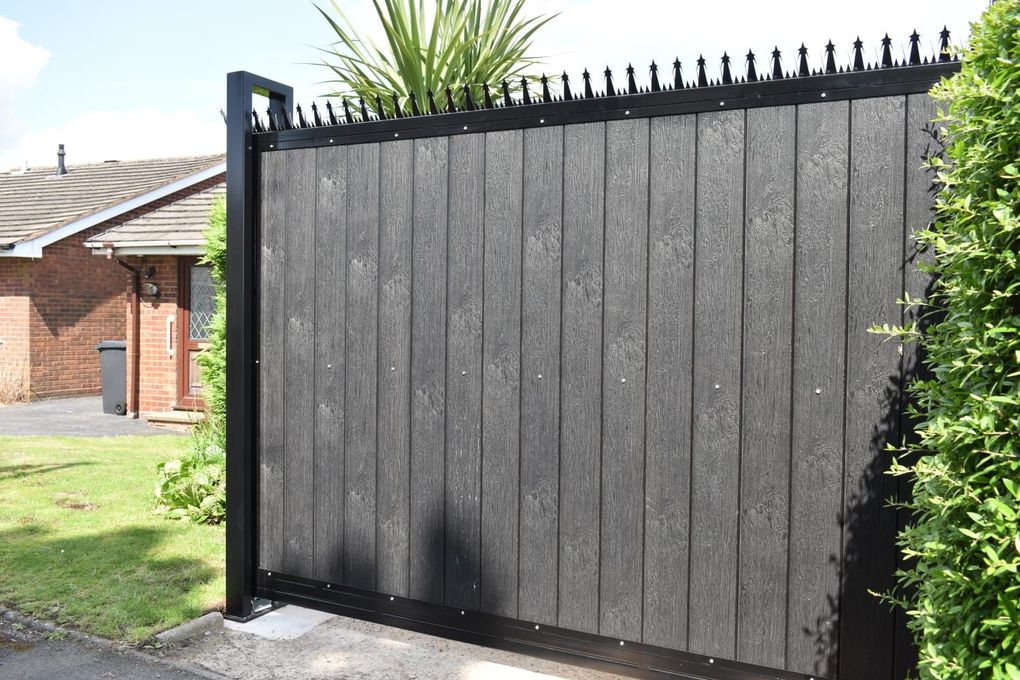
Spike top — the security option
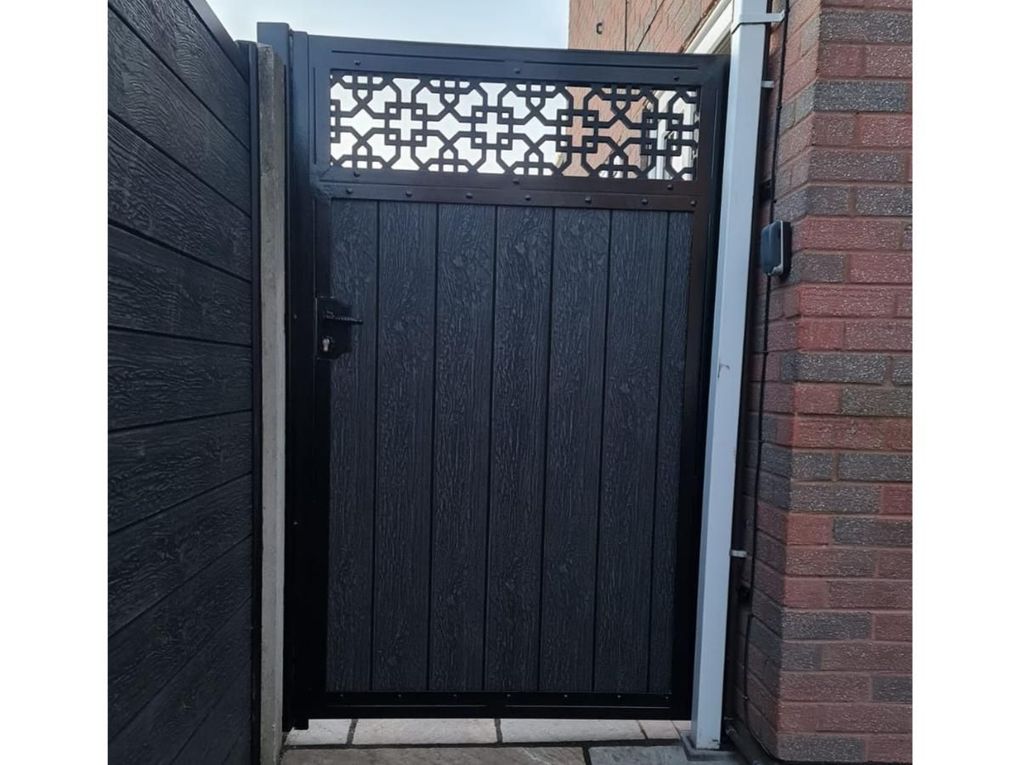
Perforated screen above the board line
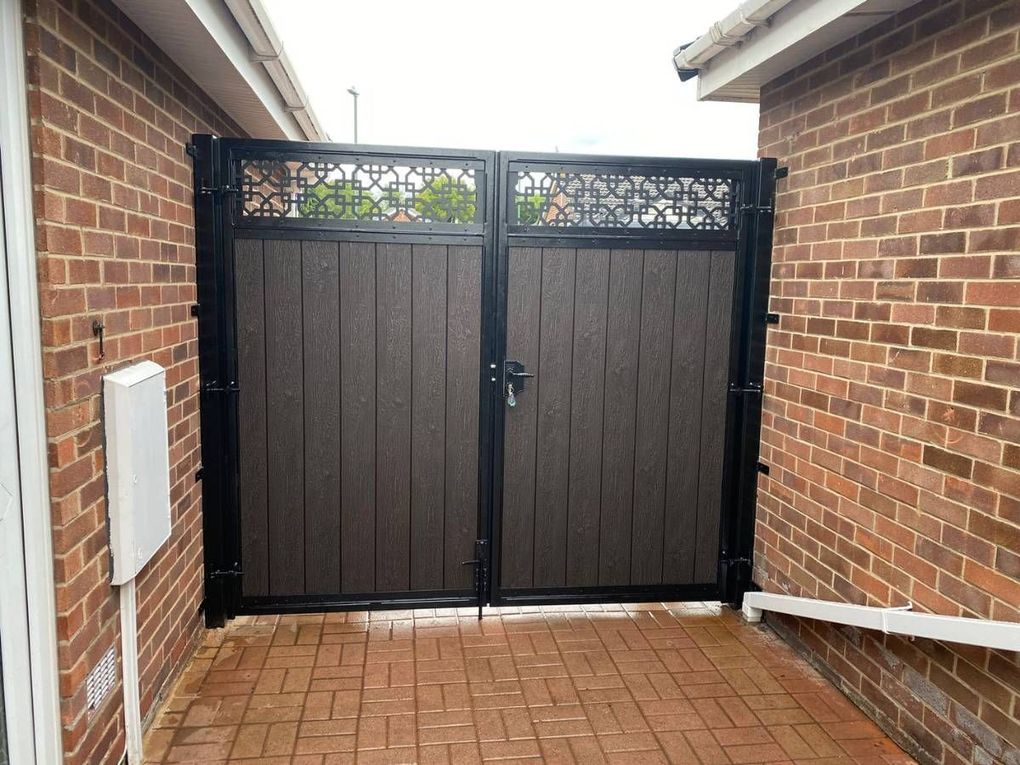
Lattice screen topper
Ironmongery
The part you touch every day, and the part that decides whether a gate is still pleasant to use in year five.
Locks and handles
We fit weather-rated gate locks rather than door hardware — the difference matters outdoors, where a cheap mechanism seizes in its second winter. Key both sides, or key outside and thumbturn inside, depending on whether the gate is also a fire escape from a rear garden.
Drop bolts and slam plates
On a pair, one leaf is held by a drop bolt into a socket set in the ground and the other closes against it. It stops the gates rattling in wind and stops a leaf being lifted off its hinges.
Letterboxes, keypads and house numbers
All fitted into the gate rather than screwed on afterwards. A letterbox in a front pedestrian gate is common where there is no through access; a keypad suits a gate several people need to use without carrying a key.
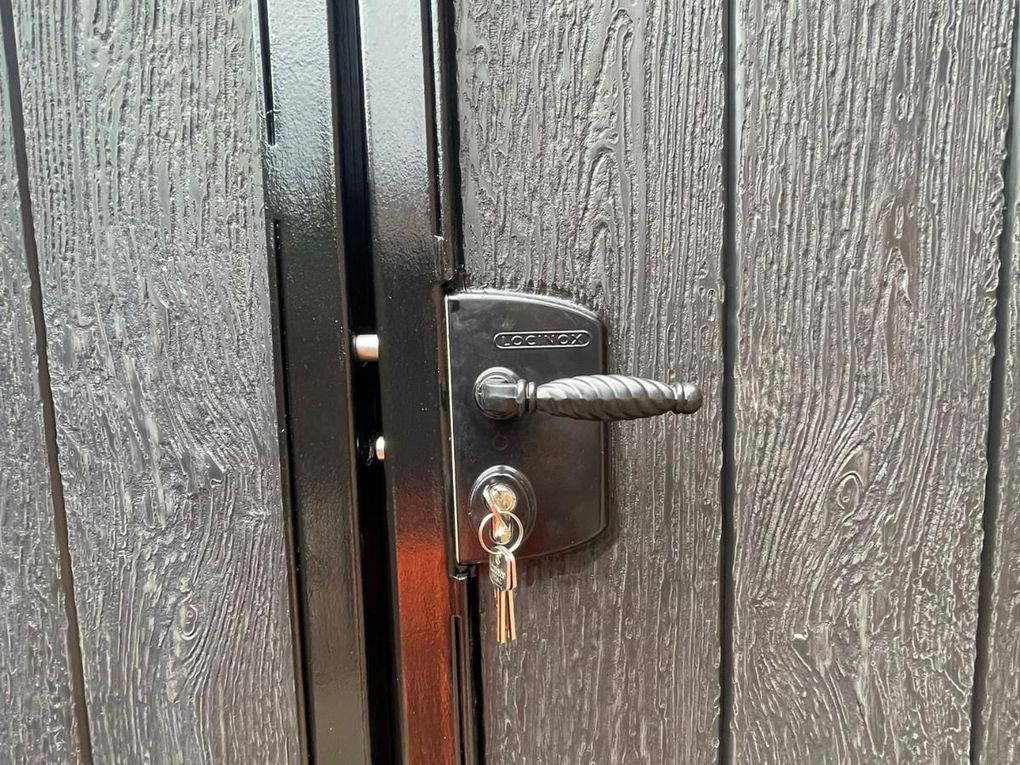
Weather-rated lock, keyed both sides
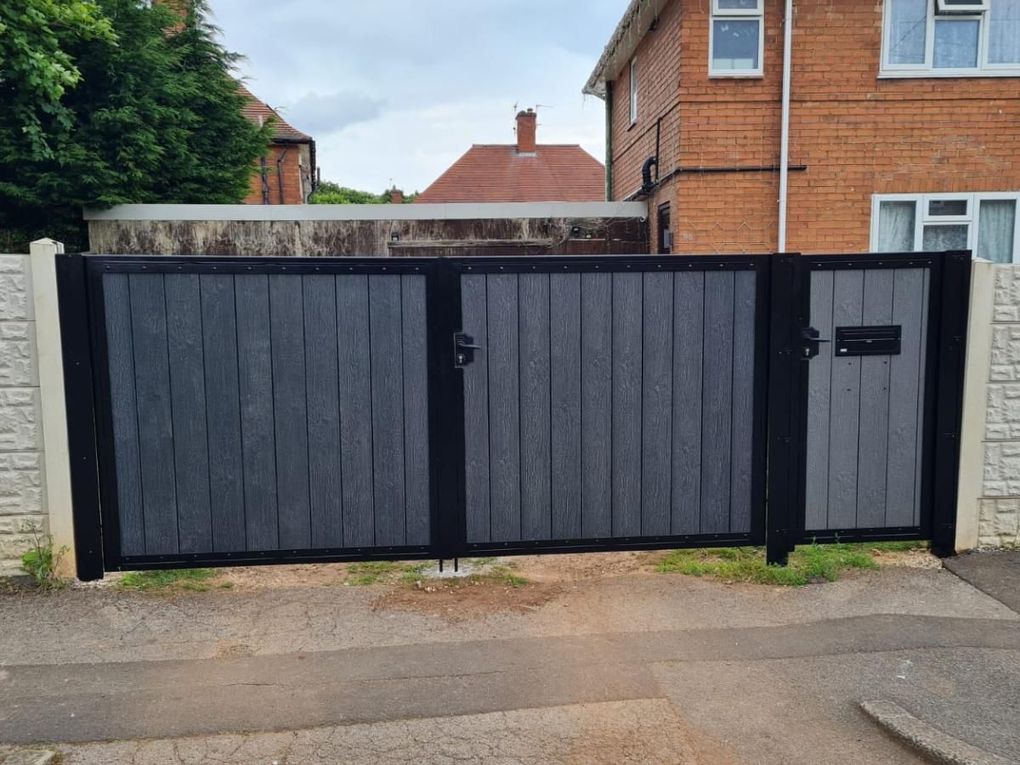
Letterbox set into a matching pedestrian gate
Stainless pull handles
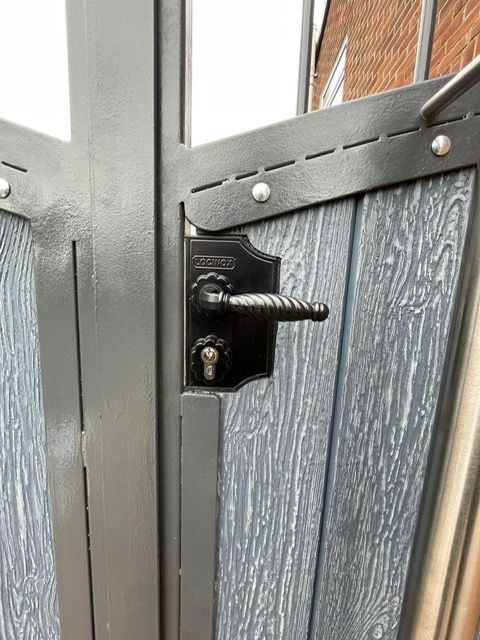
Handle and lock close up
There are a lot more of these, on real jobs rather than in a brochure. See the full gallery.
What affects the cost
Gate prices move on a handful of variables rather than a fixed rate. The main ones are:
Board colour — No difference between the six. Choose on how it looks, not on price.
Frame colour — Anthracite grey and black are standard. A specific RAL match is a small addition and worth it where it has to sit against existing railings or windows.
Shape — Flat and bow tops are much the same. A fully arched top costs more, because every board is cut to the curve and a pair has to meet exactly at the centre.
What sits above the boards — Finials are the least expensive. Spikes, screens and formed scrollwork each add frame work rather than panel work.
Ironmongery — A latch and hinges is the baseline. Locking both sides, drop bolts, letterboxes and keypads each add.
FAQs about composite gate options
Can I have a black composite gate?
Not a black board — we do not make one, and nor does anyone else in a wood-effect composite. What almost everyone means by a black gate is charcoal or anthracite grey boards in a black powder-coated frame, which reads as black from the road and looks considerably better close up than a flat black panel would. If you want genuinely black, that is a metal gate rather than a composite one.
What colours do the boards come in?
Seven: anthracite grey, charcoal, light grey, light ash, light oak, walnut and chocolate at the brown end. The range is deliberately small so that a gate made now still matches one made a few years ago — which matters more than people expect, because side gates are very often ordered long after the driveway gates.
Is the frame the same colour as the boards?
Only if you want it to be. They are two separate decisions: the frame is powder coated in any RAL colour, the boards come from the fixed range above. A matched frame makes the gate read as one object; a contrasting frame makes it read as a panel in a surround. Both are common and neither costs more.
What is a metal framed composite gate?
It is what every gate on this site is. A welded steel frame carries the load and composite board sits inside it as infill. People search for it as a separate product but it is simply how a composite gate is built — composite board alone has no structural strength and would not survive as a gate leaf.
Can you match a gate I already have?
Usually, if it came from us — that is what the small colour range is for. If it came from elsewhere, send photographs including a close-up of the board grain and something in shot for scale, and we will tell you honestly whether we can match it or only get close, before you order rather than after.
Still deciding? Send a photograph of the opening and tell us roughly what you are picturing. We will come back with what will actually fit and what it will look like, before anyone books a survey.
Get a free quote← Now pick the gate: composite driveway gates, composite garden gates or metal gates